There is a moment in every project where the work changes species: the concept the client loves has to become drawings a builder can price, schedules a supplier can order from, and renders a client will sign. Most projects don't wobble in concept, and they don't wobble on site — they wobble here, in the handoff between the two. This is how to cross that bridge cleanly, whether your technical phase happens in-house or with a partner studio.
The short answer
Treat a project as having two separate approvals, not one. Concept sign-off approves the direction — layout logic, palette, mood, budget bracket — and loose media is fine for it. Technical sign-off approves the project itself: exact renders, an itemised budget, a buildable drawing set. Freeze the first in writing before a single technical hour is spent. Everything produced after that freeze is an investment in those decisions, so a change that costs a conversation beforehand costs a redraw, a re-render and a re-quote afterwards.
The two sign-offs — and why mixing them hurts
Treat a project as having two distinct approvals:
- Concept sign-off — the client approves the direction: layout logic, palette, mood, budget bracket. Loose media is fine here: sketches, boards, precedent images.
- Technical sign-off — the client approves the project: exact renders, an itemised budget, a buildable drawing set.
The mistake is letting the first blur into the second — "approved" concepts that were really polite nods, revisited after three weeks of documentation. Everything produced after concept sign-off is an investment in those decisions; a change that costs a conversation before the freeze costs a redraw, a re-render and a re-quote after it. Freeze deliberately, in writing, before a single technical hour is spent.
Freezing the concept doesn't forbid change. It turns change from silent drift into a visible, priced decision.
The handoff pack: six things the technical phase needs
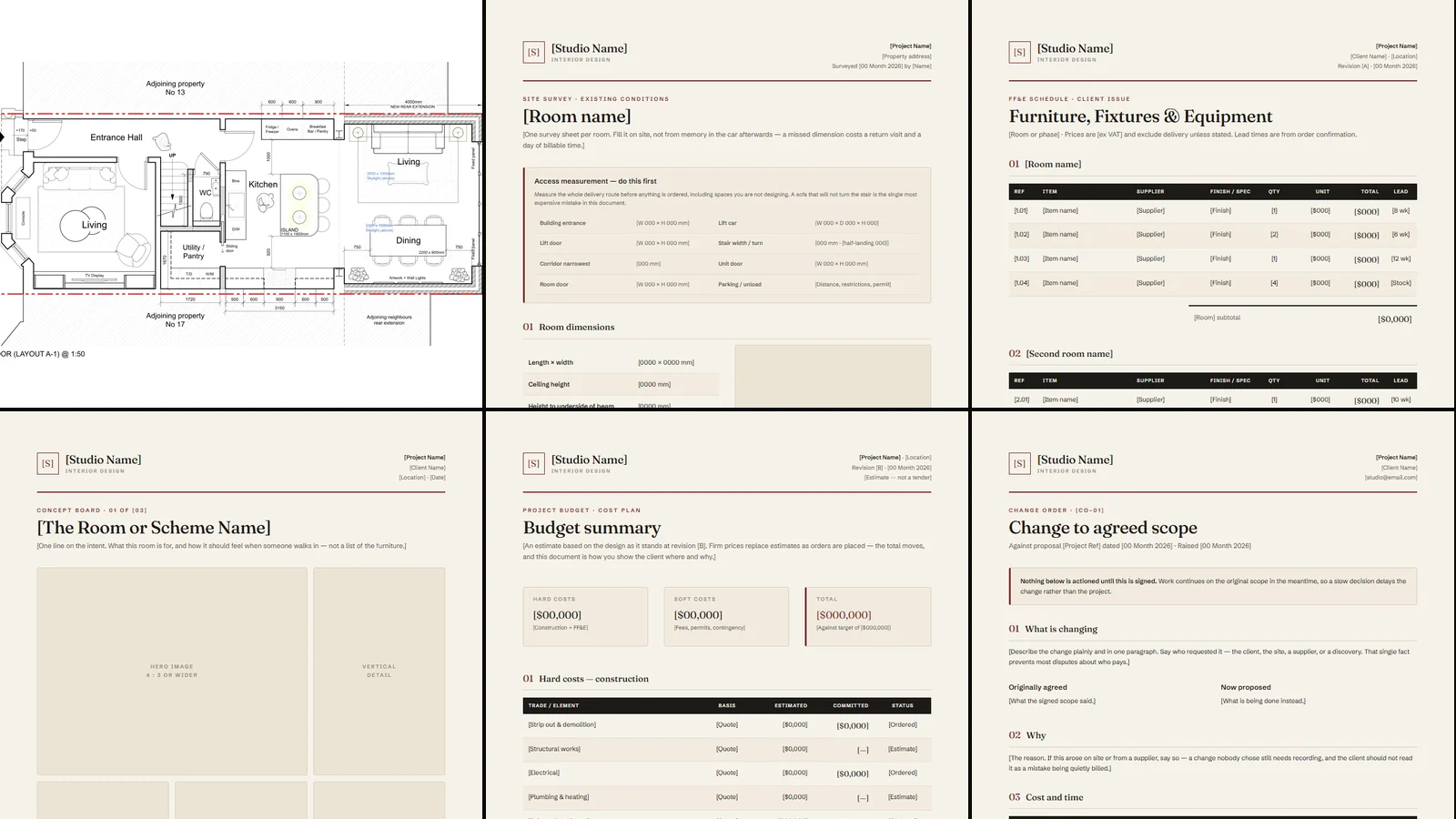
Whoever does your drafting, rendering and documentation — an employee, a freelancer, or a studio like ours — they need the same six inputs:
- The frozen layout — the plan direction as approved, with known constraints marked.
- Verified measurements — the real site, not the brochure plan: heights, openings, and the access route deliveries must survive.
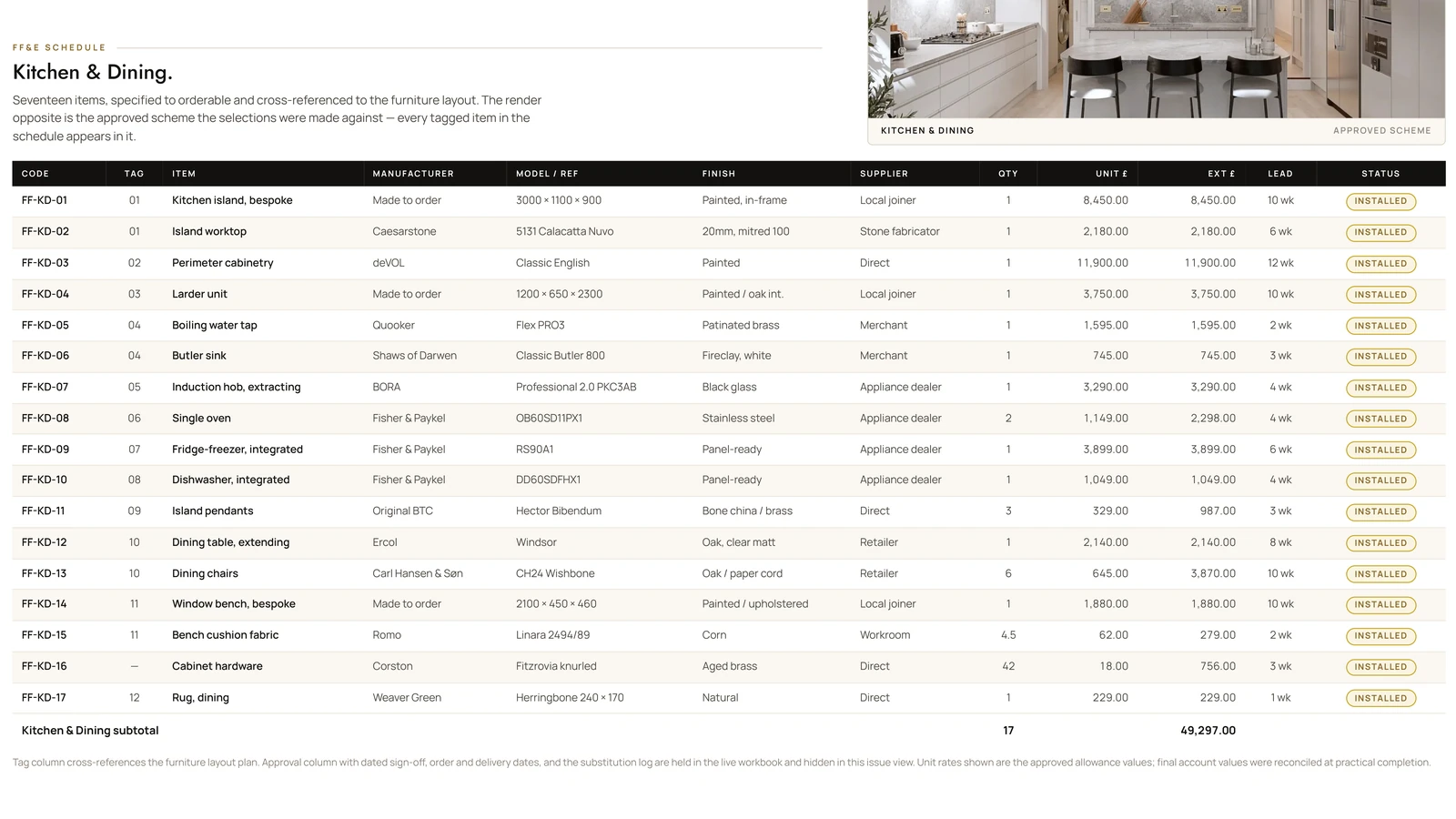
- Selections with codes — every item and finish specified to "orderable," captured in an FF&E schedule, not scattered across chats and screenshots.
- The visual North Star — the mood references the client already responded to. Renders should confirm a feeling the client has met before.
- Budget guardrails — the bracket documentation must respect, so value-engineering happens during production, not after the reveal.
- A decision protocol — who answers questions, how fast, and what counts as an approved change.
Six inputs. Projects that hand over all six get documentation that comes back right; projects that hand over three get assumptions, questions and revision rounds.
The freeze, in one email
A freeze that was never written down is not a freeze; it is a shared impression, and shared impressions are what the technical phase eventually argues about. It takes four sentences, sent the day the concept is approved:
Thanks — taking that as approval of the concept.
From here we are documenting the scheme as approved: the layout, the palette and the budget bracket in the presentation dated 14 September. Drawings, schedules and renders are all built on those, so changes to them after today are quoted as variations rather than absorbed — not to be rigid, but because a change now costs a redraw, a re-render and a re-quote rather than a conversation.
If anything in the concept still feels unresolved, this week is the moment to say so and it costs nothing.
That last line is what stops the email reading as a gate slamming. You are not forbidding change; you are pricing it honestly and giving them one clear opportunity to use the cheap version first. Clients who feel that offer was genuine reopen decisions far less often than clients who feel a door was closed on them.
Sequence the deliverables for the yes
Order of production matters as much as quality, because each deliverable prepares the client for the next:
- 1 · Plans first — quietly, as the working skeleton. Clients rarely sign off floor plans emotionally; don't ask them to.
- 2 · Renders second — the emotional approval. A photoreal image of their room does what no drawing can: it lets them say yes with their eyes.
- 3 · The schedule third — the money, itemised. Because the render came first, every line now has a face; the budget reads as "that room," not "that number."
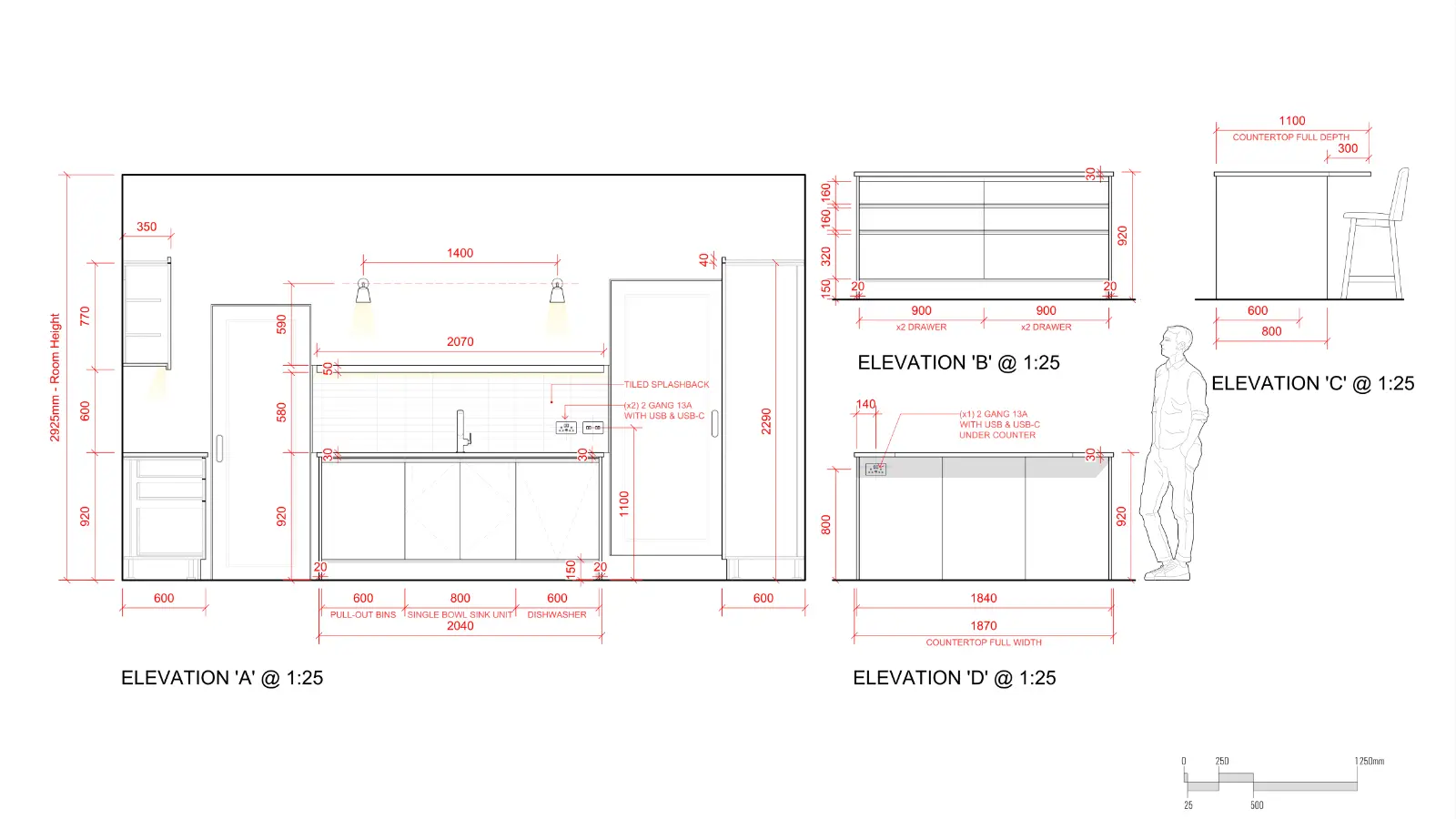
- 4 · The drawing set last — the proof it can be built. For most clients this is reassurance, not reading material.
Sell the feeling, then price the feeling, then prove the feeling. Run the order backwards — drawings first, renders last — and you'll host three long meetings instead of one short one.
The sign-off meeting itself
- Every decision-maker in the room. If one is missing, reschedule. A sign-off minus one signature is a rework order in disguise.
- Lead with the hero render, walk the money via the schedule, keep the drawing set as the supporting act.
- One source of truth. The render, the schedule and the drawings must agree — same sofa, same finish, same count. Nothing erodes confidence faster than documents that contradict each other.
- Capture it in writing — approvals recorded per item (your schedule's approval column exists for this), decisions dated, next steps owned.
Quick answers
What is the technical handoff?
The moment an approved concept moves into technical production — drawings, renders, schedules. A clean one freezes decisions, packages six inputs, and defines what the client will sign.
When should the concept be frozen?
Before documentation begins. After the freeze, change is still possible — it just becomes a visible, priced decision.
What does the client actually sign off?
The look (renders), the money (schedule), the build (drawings) — in that order, telling one consistent story.
Why do sign-off meetings stall?
Missing decision-makers, contradicting documents, or technical material shown before emotional approval. Fix sequence and consistency; most stalls vanish.
If the technical half of this bridge is the part you'd rather not carry alone: that's precisely the seat we hold for designers — everything between concept and client sign-off, delivered ready to present. Tell us where your project stands, and we'll pick it up from there.