Fabric is the hardest material to fake, which is why most 3D bedding renders look like 3D bedding renders. This is what separates the ones that do not.
We produce bed linen and soft furnishing CGI for manufacturers and interior brands. This piece covers what it costs, how the work is actually done, and what you need to send to get something usable — written for the person commissioning it rather than the person making it.
The short answer
Expect $250 to $700 per image in 2026 for a single styled bed set, and the range is wide because two different jobs share one name. Product-only on a plain background is the cheapest — a bed, the linen, controlled lighting, suitable for e-commerce grids. Styled in a room costs more because the room has to exist first, and if it does not you are paying to build a bedroom as well as dress a bed. Additional colourways are much cheaper than the first image, since the scene, the simulation and the folds are reused. What to send is covered in briefing a visualiser.
What it costs
For a single styled bed set in a built room, expect $250 to $700 per image in 2026. The range is wide because two very different jobs share the same name.
- Product-only, plain background — the cheapest. A bed, the linen, controlled lighting. Suitable for e-commerce grids.
- Styled in a room — the room has to exist first. If it does not, you are paying to build a bedroom as well as dress a bed.
- Additional colourways — much cheaper than the first image, often a fraction of it, because the simulation and the scene are reused. This is where CGI beats photography decisively.
That last point is the commercial argument. A twelve-colourway range shot photographically is twelve setups. Rendered, it is one setup and eleven material swaps.
Why simulation matters more than modelling
The difference between linen that looks soft and linen that is soft is whether the folds were sculpted or simulated.
A modelled fold is a decision — someone moved a vertex because it looked right. A simulated fold is a consequence: of the weave, the weight of the fabric, where it was last touched and what it is draped over. The second one reads as real because it obeys the same rules the eye has been watching cloth obey since birth.
This is also why cheap bedding renders fail in a specific way. They are symmetrical. Real bedding is never symmetrical, because gravity and use are not symmetrical.
Weave, weight and the things that give it away
Three properties do most of the work, and getting any of them wrong is immediately visible even to someone who cannot explain why.
- Weave structure — percale, sateen and linen behave differently at the same distance. Sateen catches light along the fibre; percale scatters it. A generic cloth shader flattens that distinction and the product stops looking like the product.
- Weight and drape — heavy linen falls in fewer, deeper folds. Lightweight cotton makes many shallow ones. This is a simulation setting, not a texture, and it is the single most common thing done wrong.
- Light through, not just off — fabric is slightly translucent. Light passing through the top sheet is what makes the material feel soft rather than painted.
What to send us
The brief matters more than the budget. A well-specified job at the lower price band beats a vague one at the top of it.
- Fabric specification — composition, weave, GSM or thread count. Not "white cotton".
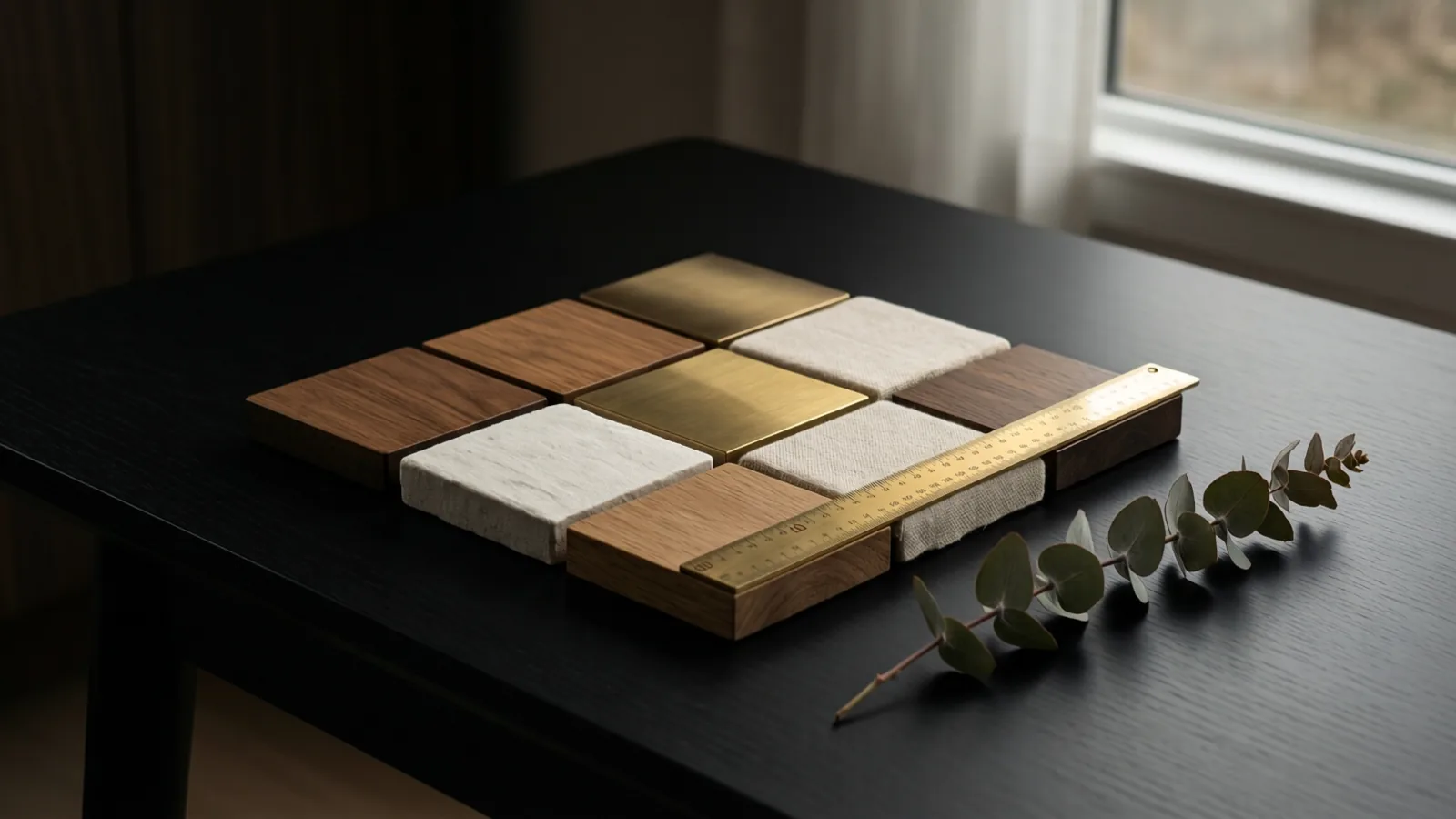
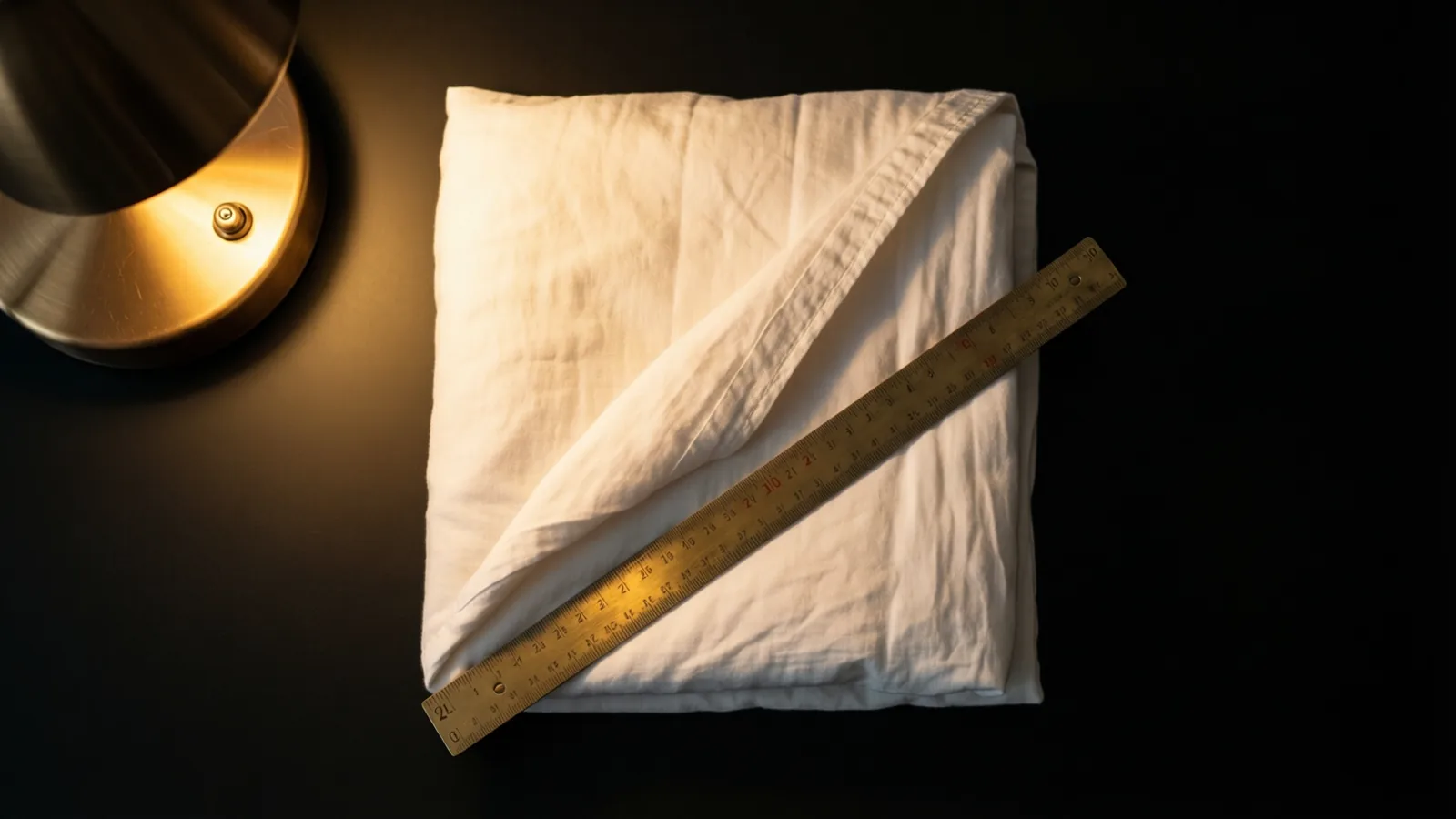
- A flat scan or high-resolution photograph of the material, evenly lit, with a scale reference. A phone photo in daylight is genuinely useful; a product shot from your website is not.
- Dimensions — of the products and of any bed the set is intended to fit.
- Styling reference — existing photography, a competitor image, or a mood reference showing how tidy or lived-in the range should look. This decides the whole image and is the thing most often left unsaid.
- Physical samples, if you can send them. Nothing replaces having the cloth on the desk.
Why bedding costs more than a sofa
Clients who have commissioned furniture CGI are often surprised by bedding, and the reason is worth stating because it changes what you should ask for.
A sofa is largely a solved shape: modelled once, upholstered, done. Bedding has almost no fixed shape at all. Every fold is the result of a simulation — the weight of the cloth, the friction between layers, where it was last touched — and simulation is iterative. A duvet that drapes wrongly is not corrected by moving geometry; it is re-simulated, and each attempt takes time.
Which leads to two practical consequences.
- The first image of a set carries almost all of the cost. Colourways afterwards reuse the same simulated folds and are a fraction of it, so order the range together rather than one at a time.
- Changing the styling is cheap; changing the cloth is not. Moving a cushion or swapping a throw is minutes. Changing linen to silk changes how everything falls, and re-runs the simulation.
Decide the fabric weight before the shoot, exactly as you would decide it before a photograph, and the rest of the range is inexpensive.
Rendering versus photography
This is not a question of which is better. It is a question of how many variants you need.
For one hero image of one product, photography is often the equal choice and sometimes the cheaper one. For a range — multiple colourways, multiple sizes, consistent framing across a product grid — CGI wins on cost and wins decisively on consistency, because every image shares an identical camera, identical lighting and identical styling.
There is also a timing argument that gets overlooked. Renders can be produced before the product exists. Photography cannot, which matters if you are pitching a range to a buyer before committing to manufacture.
Where to start
Send the fabric specification, a flat scan and one styling reference. That is enough for a firm quote, and enough to tell you quickly whether CGI or a photoshoot is the right route for what you are trying to sell.