Most projects do not end. They fade — a few snags, a query about paint six weeks later, a call about a warranty in March. Nothing dramatic, but the relationship never quite closes, and the last impression is administrative rather than good.
A handover pack ends the project on purpose.
The short answer
Six things, and they exist so the project ends on purpose rather than fading into queries six weeks later: the final specification as built, with codes — the finishes package updated to what was actually installed — the one document nobody else could reconstruct in three years; care and maintenance written plainly, which prevents most of the damage later blamed on the specification; warranties with start dates and what each covers; supplier and trade contacts, including the joiner, electrician and stone supplier; a room-by-room paint schedule with brand and finish, which is the most-consulted page in the pack; and as-built notes where things ended up differently from the drawings.
What to include
The final specification. Every finish and fitting as built, with codes. This is the document they will need in three years when something needs replacing, and it is the one thing nobody else can reconstruct.
Care and maintenance. How to clean the stone, what not to use on the timber, how often to oil the worktop. Written plainly. This single section prevents most of the damage that clients later attribute to the specification.
Warranties and guarantees, with start dates and what each covers.
Supplier and trade contacts. Who supplied what, who installed it, who to call. Include the joiner, the electrician, the stone supplier.
Paint schedule. Room by room, with colour, brand and finish. Small, and the single most-consulted page in the pack.
As-built notes. Where things ended up differently to the drawing, and why. Honest and brief.
Key photographs. The finished rooms. They will use these, and you want them circulating.
What to leave out
Working drawings, revision history, internal correspondence, superseded schedules. The pack records the final state, not the journey. Including the history buries the parts that matter and invites re-litigation of decisions already made.
Also leave out anything you are not certain of. An incorrect paint code in a handover pack surfaces years later, with total confidence attached to it.
The paint schedule, written properly
It is the smallest page in the pack and the one that gets opened years later, usually by somebody who is not your client — a decorator, a new owner, a partner touching up a scuff. Written loosely it sends them back to you; written properly it works without you.
| Room | Surface | Brand & colour | Finish |
|---|---|---|---|
| Hall | Walls | Brand, colour name, colour code | Matt emulsion |
| Hall | Woodwork & doors | Brand, colour name, colour code | Eggshell |
| Hall | Ceiling | Brand, colour name, colour code | Matt |
| Kitchen | Walls | Brand, colour name, colour code | Wipeable matt |
Three details make the difference. The code, not just the name, because names repeat across ranges and get discontinued. The finish, because the same colour in matt and eggshell reads as two colours. And the surface split, because “Hall — off-white” does not tell a decorator whether the ceiling matches the walls.
Add the date the decorating was completed. In five years, knowing the paint is five years old is itself useful information.
Why it protects you
Two ways.
It ends the support window without a conversation about ending it. A pack that answers the predictable questions means those questions do not arrive as emails eight months later.
And it records the state at completion. When a client asks in year two why the timber has moved, the maintenance section is already on record. Not defensively — it is simply the difference between a query and a complaint.
Why it generates referrals
This is the part designers underrate.
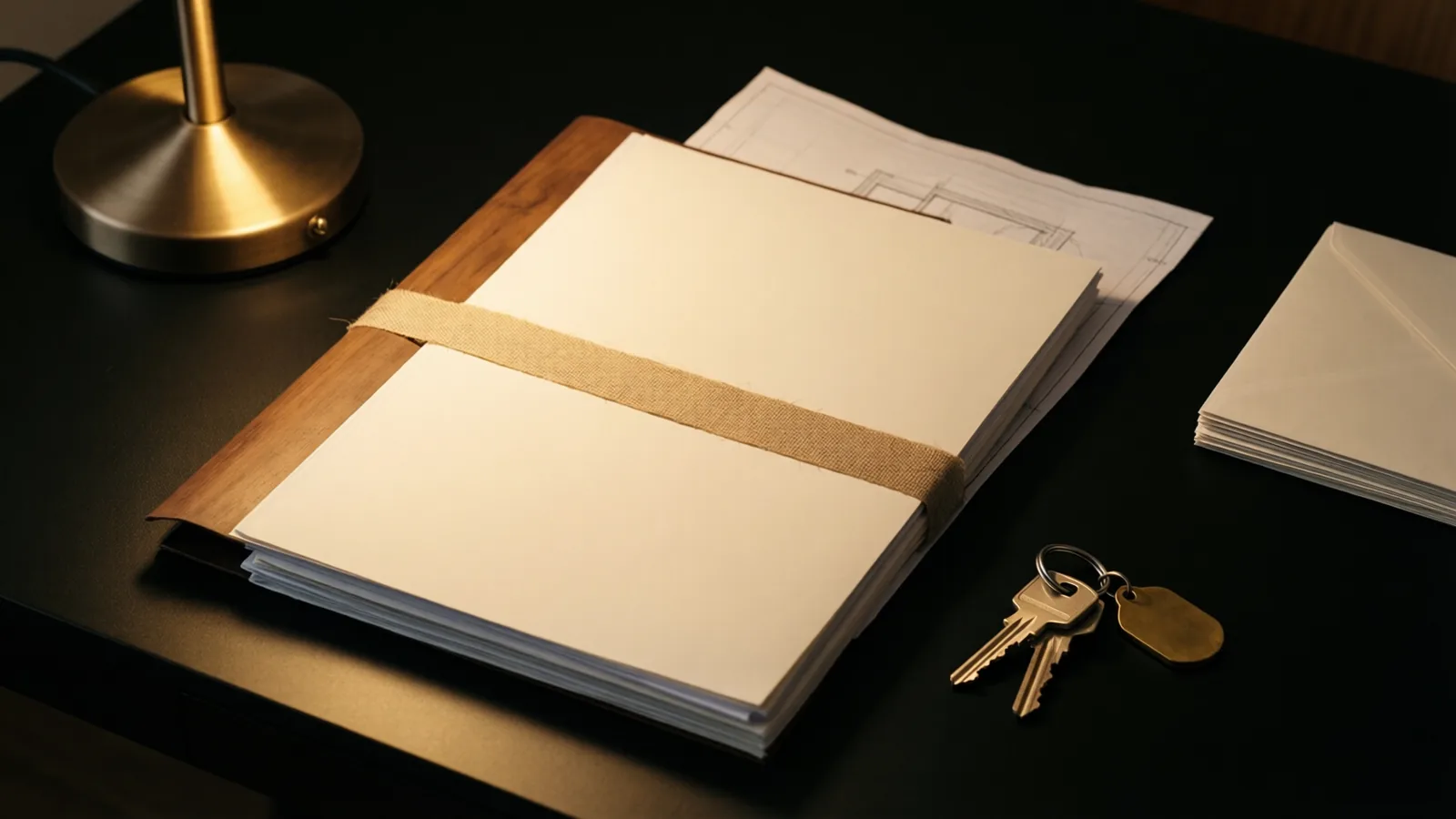
The handover pack is the last thing a client receives from you, and it is the thing they show other people. A friend admires the kitchen; out comes the pack. It is a portfolio that lives in their house and gets opened by exactly the people you want to reach.
Which is an argument for making it look like something, not like a folder of PDFs. The design cost is an hour. The distribution is free and it runs for years.
When to hand it over
At practical completion, in person if you can, walking through it briefly. Not emailed weeks later once the momentum has gone.
Handing it over in the finished room, while the client is still delighted, does something a PDF attachment cannot. It marks the end — and a project that ends properly is one the client remembers as finished rather than as having simply stopped.